
Affiliate marketing can seem like navigating a jungle. But with the right tools, you’re not just surviving, you’re thriving. Let’s break down what these tools are and why they matter, especially if you’re just starting out.
Which Tools Are Necessary And Why Are They Necessary?
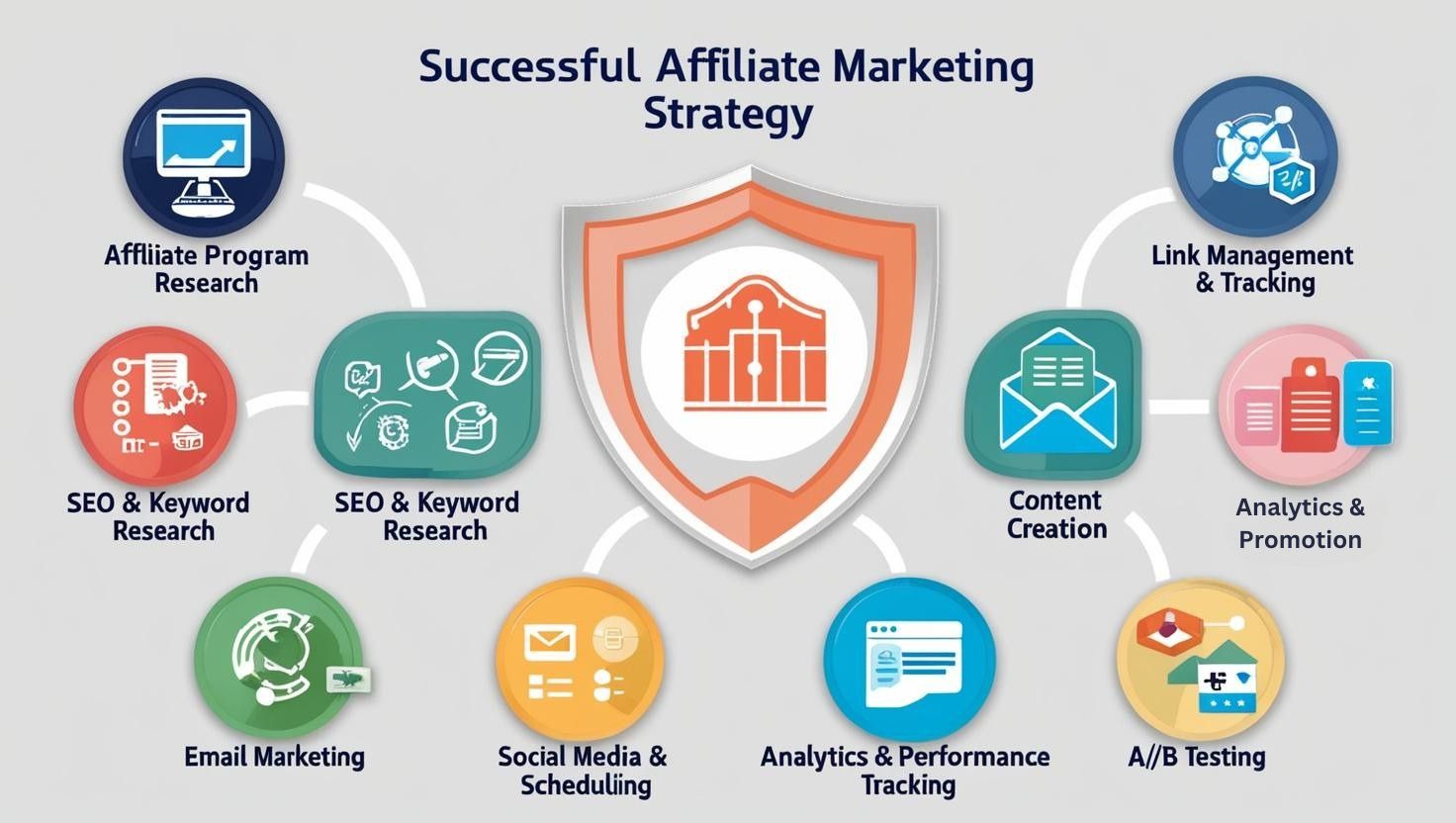
To succeed in affiliate marketing, you need the right tools to streamline your workflow, track performance, and optimize your strategy. Here are the most essential tools and why they matter:
- Affiliate Program Research Tools (e.g., ShareASale, ClickBank, Awin)
→ Help you find high-quality affiliate programs that align with your niche, saving time and maximizing earnings. - Link Management & Tracking Tools (e.g., Pretty Links, ThirstyAffiliates, Bitly)
→ Ensure your links are organized, trackable, and user-friendly, making it easier to monitor clicks and conversions. - SEO & Keyword Research Tools (e.g., Ahrefs, SEMrush, Ubersuggest)
→ Improve your content’s search visibility, driving more organic traffic to your affiliate links. - Content Creation Tools (e.g., Canva, Grammarly, Jasper AI)
→ Help craft high-quality, engaging content that attracts and retains your audience. - Email Marketing Tools (e.g., ConvertKit, MailerLite, AWeber)
→ Allow you to build and nurture your audience, increasing long-term conversions. - Social Media & Scheduling Tools (e.g., Buffer, Hootsuite, Tailwind)
→ Help manage social media posts efficiently, ensuring consistent engagement without constant manual effort. - Analytics & Performance Tracking Tools (e.g., Google Analytics, Google Search Console)
→ Provide insights into what’s working and what needs improvement, so you can refine your strategy. - A/B Testing Tools (e.g., Google Optimize, Optimizely)
→ Allow you to test different content, landing pages, and strategies to see what converts best.
Each of these tools plays a vital role in making affiliate marketing more effective, data-driven, and profitable. Without them, you’re just guessing—and in this game, smart decisions make all the difference.
Table of Contents
- Introduction: Why Tools Matter
- Must-Have Affiliate Marketing Tools
- Getting Started: Essential Tools
- Boosting Engagement with Content & Social Media
- Maximizing Revenue with Performance Tools
- Advanced Strategies for Smart Scaling
- Final Thoughts: Work Smarter, Not
Affiliate marketing tools are like your backstage passes, letting you in on strategies, insights, and efficiencies that you’d otherwise miss. Imagine having a helper that saves you time and boosts your earnings. That’s the power of these tools, turning a complex task into something much more manageable.
Who exactly are these tools for, you ask? Basically, anyone who wants to step up their affiliate game. Whether you’re brand new to the scene or you’re looking to refine your strategy, the right tools can give you a solid leg-up.
I often get questions like, ‘Why should I even bother with these tools?’ or ‘Can’t I just wing it without them?’ Here’s the deal: relying solely on guesswork or basic tactics isn’t going to cut it in today’s competitive environment. Embracing these tools not only saves time but also helps you track performance and optimize your marketing efforts.
Jumping into affiliate marketing without tools is like trying to build a house with your bare hands. Sure, you might get some walls up, but will they stand the test of time?
Essential Tools for Starting Your Affiliate Marketing Journey
Getting started in affiliate marketing means equipping yourself with the right set of tools to make your journey a little less bumpy. Think of these essential tools as your starter pack full of everything you need to get rolling.
Sometimes finding the right affiliate programs feels like searching for a needle in a haystack. Fortunately, there are tools out there designed to streamline this process. They help identify programs that align with your niche and goals, saving you hours of fruitless searching.

Once you’re in, managing and tracking your affiliate links is key. Without this, your strategy could end up like a leaky ship, losing potential revenue left and right. Tools specifically made for this job offer a centralized hub to keep your links in check and ensure every click counts.
Analytics tools are game-changers in monitoring performance. They provide insights into what’s working and what needs a tweak, painting a clear picture of your successes and areas for improvement. With these insights, you can make data-driven decisions rather than shooting in the dark.
The beauty of these tools isn’t just in their functionality but in how they empower you to focus on creating value rather than getting bogged down by administration. Think of them as your personal assistant, working tirelessly to simplify operations and optimize productivity.
Leveraging Social Media and Content Tools for Better Engagement
Social media is like the megaphone for your affiliate marketing voice, and using the right tools can turn a whisper into a roar.
These platforms are no longer just about posting the occasional update. With the right strategies, they can stimulate engagement and drive significant traffic to your affiliate links.
Content creation tools are essential for crafting compelling stories that captivate your audience.
Whether it’s stunning visuals, engaging blog posts, or eye-catching infographics, these tools help you create content that resonates.
SEO tools play a pivotal role in ensuring that your content reaches the right audience.
From keyword research to on-page optimization, these tools help improve your visibility in search engines, making it easier for potential customers to find you.
To provide a real-world context, take a look at some examples of affiliate marketers who’ve successfully used content tools to boost their strategies. Seeing these tools in action can offer inspiration and guidance on tailoring a plan to suit your unique style and audience needs.
Social media management tools can also offer a streamlined way of scheduling posts, tracking engagement, and analyzing what’s resonating with your audience, helping maximize your outreach without maxing out on your time.
Performance-Enhancing Tools for Monitoring and Boosting Revenue
Now that you’ve got your foot in the door, it’s time to keep an eye on the money. Performance-enhancing tools are all about watching your traffic like a hawk and making sure every click is worth your while.
Traffic and engagement analysis tools give you a snapshot of how folks are interacting with your content.
Are they clicking and bouncing, or staying and exploring? Knowing these details can guide you to make strategic tweaks and increase stickiness.
Revenue tracking tools are like your financial advisor, letting you know where the money’s coming from and what’s just not working.
It’s vital to have a clear picture of the income streams to spot trends and anticipate peaks and troughs.
A/B testing tools are where you unravel what makes your audience tick.
They let you test different variations of your content to see which one hits the mark. It’s like cooking up two versions of the same dish to find out which your guests savor more.
Email marketing holds potential for ongoing engagement and conversions, and the right tools can make your campaigns much more impactful. Automating email sequences based on user behavior or preferences keeps the conversation going without you needing to micromanage every detail.
Advanced Strategies for Utilizing Affiliate Marketing Tools
Once you’re past the basics, it’s time to level up with advanced strategies using your marketing tools. These strategies are about crafting a sophisticated approach that pulls together all the elements we’ve explored so far.
Building a comprehensive tool-based strategy involves mapping out how each tool complements the other. Just like a well-oiled machine, your tools should work in harmony to streamline processes and maximize outcomes.
Case studies of successful affiliate marketing campaigns can offer valuable insights. By analyzing these examples, you can learn effective methods and adapt them to fit your brand’s voice and market niche.
Staying on the cutting edge means exploring emerging tools and technologies. The digital landscape is always changing, and being open to new innovations can give you a competitive edge.
Balancing personalization and automation is essential in today’s digital age. While automation saves time, personalization builds connections. Striking the right balance ensures that your brand feels human but remains efficient. This can lead to increased loyalty and trust with your audience.
Final Thoughts: Work Smarter, Not Harder
Affiliate marketing is much more than just sharing links—it’s about strategy, efficiency, and optimization. The right tools help you find the best programs, track performance, create engaging content, and automate tasks, making your efforts more effective and profitable. Without them, you’re just guessing, and in a competitive space, that’s not a winning strategy. By leveraging these essential tools, you can save time, maximize earnings, and grow your business with confidence. Success in affiliate marketing isn’t just about working hard—it’s about working smart.
What do you think?—are you already using some of these tools, or is there one you’re excited to try? Drop a comment below with your thoughts or any questions—you never know who else might benefit from the discussion!
Hello, I really like your article because you just shared your knowledge about affiliate marketing that makes me more motivated everyday! Indeed, you must use the right tools to succeed in this business. personally, I’m on WA so I use their tools such as Jaaxy, the AI content writer, as well as the course that are taught there. And generally, I’m going okay. I do believe that if you are consistent, and have a great strategy, your affiliate marketing business will thrive. Thanks once again for sharing your perspective. Indeed, we must work smarter, not harder!
Hi Angelce903, thanks for your comments.
Bob